

This second article of “Le Jardin News” will be centered around wine to be enjoyed alongside French cuisine.
At the restaurant “Le Jardin” of HOTEL de L’ALPAGE the spring-inspired dinner course, Menu Printanier, will be available during the Golden Week period. In this article, we will introduce a carefully curated selection of wines from our cellar, each thoughtfully chosen to complement the dishes of this special course.
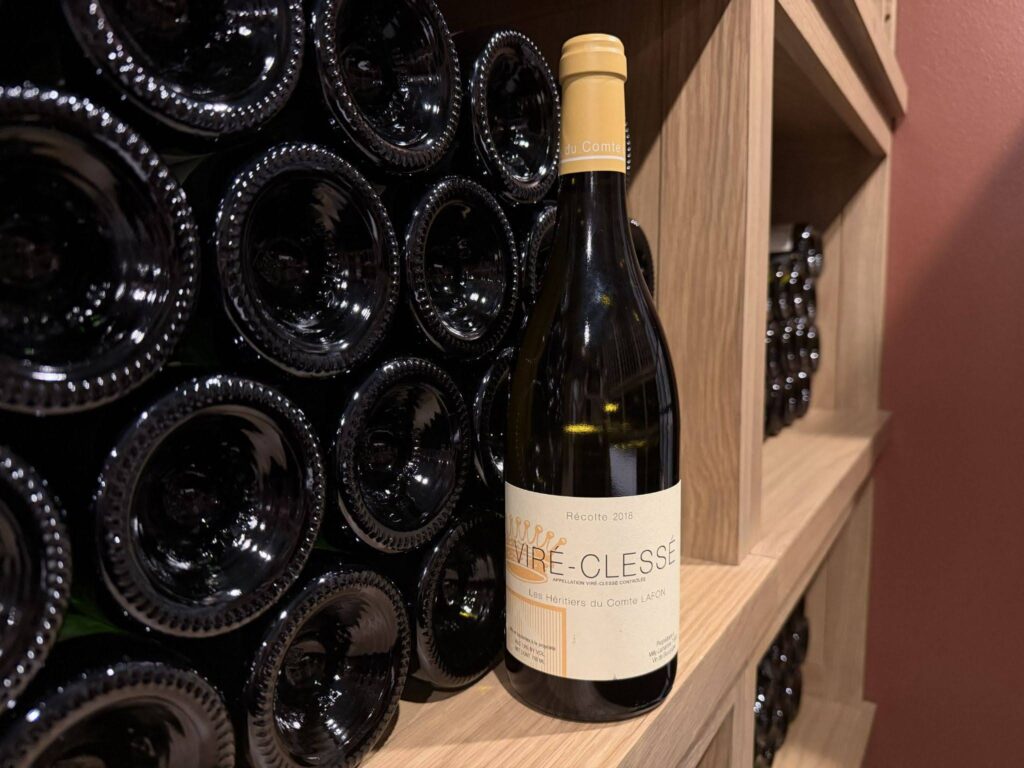
The “Viré-Clessé” made by Comtes Lafon, a renowned Meursault producer in the Mâconnais district of southern Burgundy, is a wine with well-balanced acidity and a delicate hint of oak that pairs beautifully with the amuse “Warm French White Asparagus with Hollandaise Sauce” and the appetizer “Marinated Flounder and Pissenlit Salad with Aïoli Petits Points.” Its clean, refined profile perfectly complements the richness of the Hollandaise sauce and the bright flavors of the aïoli — available by the glass, it lends itself to a relaxed and refined tasting experience.
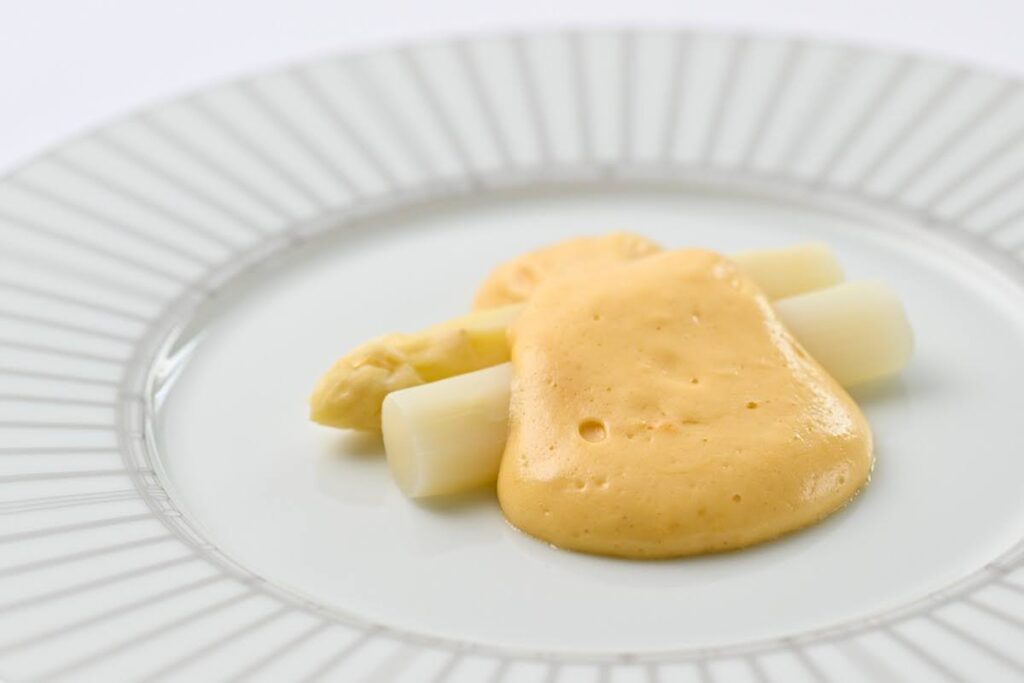
Additional White Asparagus Spear +¥1,200
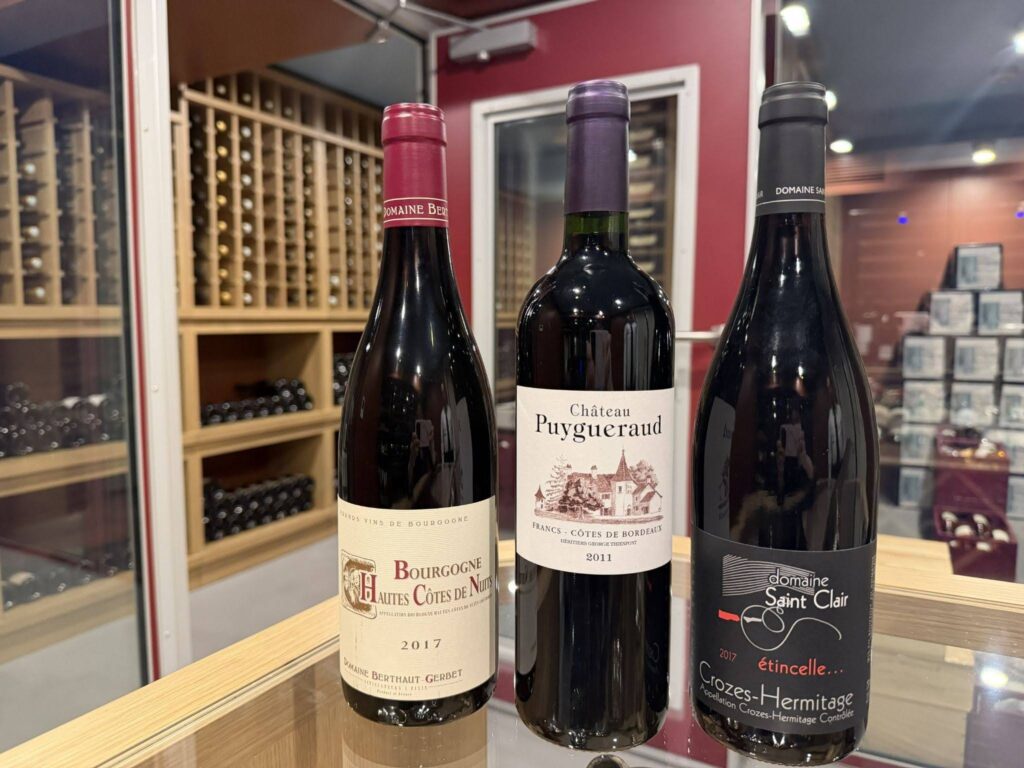
The Bordeaux red wine “Château Puygueraud” offers well-balanced tannins, combining depth with a refined elegance. With minimal variation between vintages and a reliable availability, it is a wine that can be enjoyed with ease by a wide range of guests.
Wines produced in the higher-altitude, cooler regions of Burgundy are notably characterized by their pronounced acidity. “Hautes-Côtes de Nuits” is no exception, being produced in precisely this kind of terroir, resulting in a wine where a berry-like acidity shines through alongside the tannins. Despite its full-bodied depth, it reveals a pleasing fruitiness and a refreshing lift on the palate.
For the main course of the Menu Printanier, guests may choose between two choices: “Roasted Lamb wrapped in Spring Cabbage with Mint Accents, served with Couscous Farce” or “Grilled French Veal Loin with Calvados Essence”.
Whether a Bordeaux red with well-structured tannins or a Burgundy red whose fruit character enhances the delicate flavors of the meat, both wines pair equally well with the dishes introduced above.
As for pairing with the roasted lamb, we also recommend “Crozes-Hermitage,” a red wine from the south of France with a pleasantly toasty character. Its balance of spice, bitterness, and well-measured tannins pairs beautifully with the sauce.
Veal, on the other hand, is a lean and delicate meat, known for its tenderness and delicate flavor. In this preparation, it is served with a Calvados-infused sauce, which brings buttery and nutty notes to the dish. The dish therefore also pairs wonderfully with a fuller-bodied white wine that has richness and depth.
For a pairing that either accentuates the character of the ingredients or harmonizes seamlessly with the sauce, our sommelier will be pleased to tailor the recommendation to each guest’s preference.
The limited-time menu, Menu Printanier, will be available daily from April 25 (Saturday) to May 6 (Wednesday), 2026.
Savor France’s spring flavors while enjoying the harmony of carefully selected wine pairings.
Beyond the wines introduced above, HOTEL de L’ALPAGE houses a cellar of over 2,000 bottles, all directly imported from France.
Our approach to wine is guided by our owner’s philosophy and words:
“French wine is an original expression rooted in the traditions of each region. As an integral element of local culture, inseparable from its cuisine, wine naturally reflects the identity of each region. Thus, the cuisine of its native region is the most natural first choice for pairing, while broader pairings derive their coherence from this foundation. Creating truly creative pairings requires a deep understanding of the regionality of both the food and the wine from their respective areas. After all, what defines a wine is its terroir: its geological, climatic, geographical, and cultural context. By contrast, wines produced in regions without a local food culture or culinary tradition tied to them have no choice but to become commercial products that imitate original wines. They are less a product of place and more a product of marketing.”
Guided by this conviction, and in order to bring out the full, delicate flavors of French cuisine, we have curated a selection exclusively of French wines. The character of the soil and climate nurtured by the terroir of each region resonates naturally with the aromas and flavors of the dishes, creating a rich harmony with every sip.
We are occasionally asked why we only offer French wine, and the answer is simple, yet carries a deeper meaning: “Because we are an auberge serving French cuisine.” Our commitment to direct importation also reflects this philosophy. By minimizing the number of intermediaries and transporting the wines as directly as possible, we reduce the stress placed on the bottles during transit, allowing us to present each bottle in optimal condition and preserving the wine’s freshness and vitality.
Rather than assembling a collection of prestigious labels, we select each bottle for its ability to resonate with the cuisine and carry meaning in its setting. From our classic selections to wines chosen to complement the dish of the moment, we tailor our recommendations to each guest’s individual preferences, and on occasion, we may even suggest special bottles not listed on our wine list, such as those pictured below.
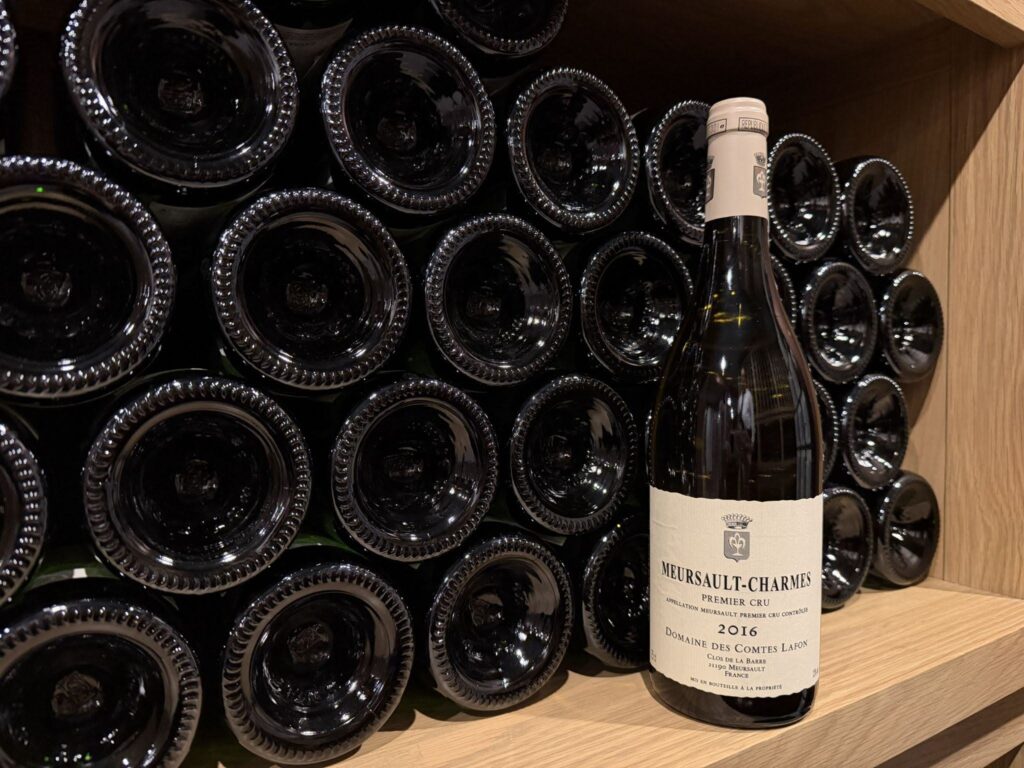
One such bottle that exemplifies this philosophy is a Meursault Premier Cru made by Domaine des Comtes Lafon, one of the most esteemed producers in Meursault. It is made from grapes grown in a highly regarded Premier Cru vineyard within the village of Meursault in Burgundy, France.
Already limited in production by nature, the 2016 vintage was further impacted by frost damage that caused a significant decline in yields across Meursault as a whole. As a result, this vintage has attracted considerable attention from restaurants and collectors worldwide, making it an exceptionally rare and sought-after bottle.
In order to offer our guests the finest wines, proper storage is every bit as important as the quality of the wine itself. A wine cellar is a dedicated storage facility designed to preserve the quality of wine. It recreates the kind of environment found in the underground caves of wineries in France, and is used for the long-term storage and careful ageing of wines over months, years, or even decades. Wine requires a specific temperature range for optimal preservation. The primary role of a wine cellar is to maintain a stable internal temperature suited to wine storage, independent of fluctuations in the outside air. Keeping the temperature at the appropriate level not only prevents deterioration, but also encourages the wine to age gracefully. Not only temperature, but also humidity within the cellar plays a vital role in wine storage. Maintaining the right level of humidity prevents the corks from drying out, ensuring each bottle remains properly sealed.
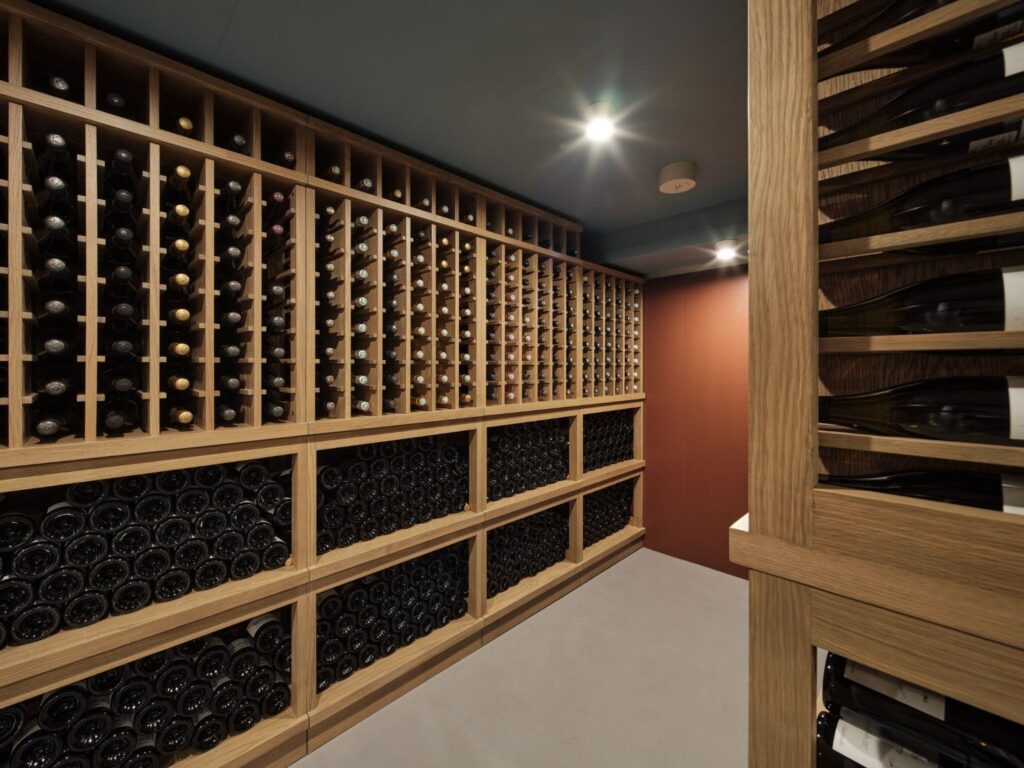
The wine cellar located in the basement of our hotel is designed as a fully integrated, room-scale cellar, with precise control over both temperature and humidity. In the event of a power outage, the facility is also designed to sustain a stable environment for a defined period of time through the use of an emergency power supply.
Inside the cellar, there is also a tasting table, and a collection of rare and historic items related to the world of wine are on display. This collection includes antique tastevins and wine openers from the 18th and 19th centuries, as well as a hydrometer used to measure alcohol content through buoyancy.
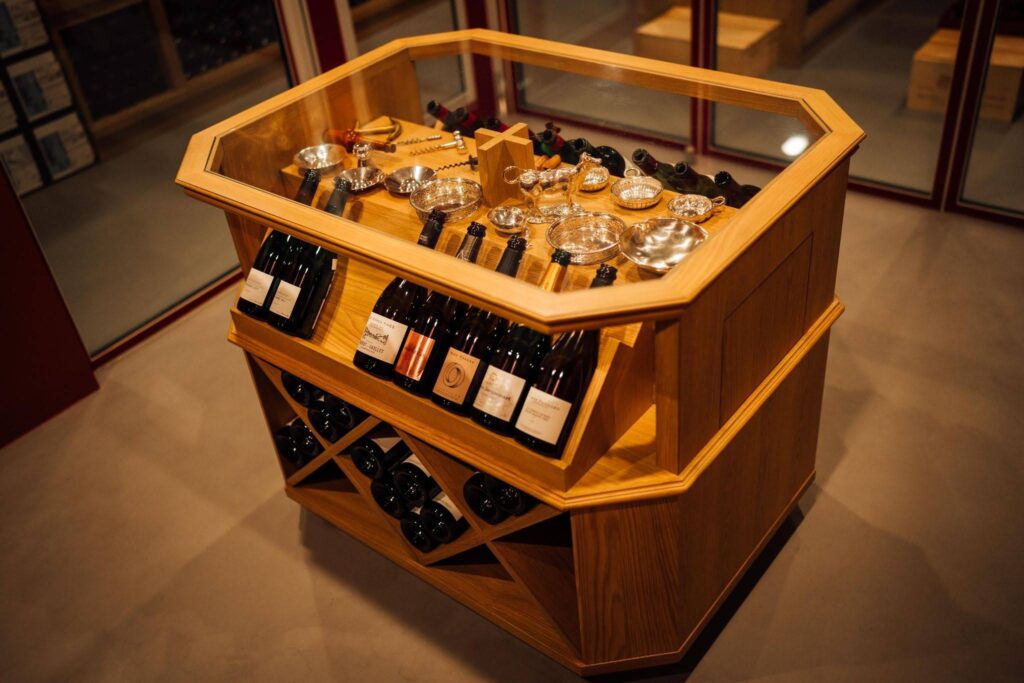
A tastevin is a shallow, dimpled silver cup used primarily by sommeliers for wine tasting. Its textured surface was designed to reflect light, allowing the color, brilliance, and clarity of a wine to be assessed even by the flickering light of a candle in the dimly lit underground cellars of old France. Said to have first appeared in France around the 17th century, it was once considered an essential tool of the sommelier’s trade, traditionally worn hanging from the neck. Today, tasting by glass has become the standard practice, but the tastevin remains an important symbol of the traditions and heritage of wine culture.
We also display several types of wine accessories still in use today, including various wine openers. From models equipped with a small brush for removing cork residue from the bottleneck to compact, portable designs, each represents a thoughtful adaptation for a different purpose. However, sommeliers and wine professionals, as well as enthusiasts, often favour the sommelier’s knife as their tool of choice.
Among wine professionals, the choice of tools is as carefully considered as the wine itself, with each gesture balancing precision and grace.
Simply standing within the cellar, one senses in the bottles and tools the quiet depth of a long-standing wine culture. Explore and enjoy this space with a personal guided tour from our sommelier.
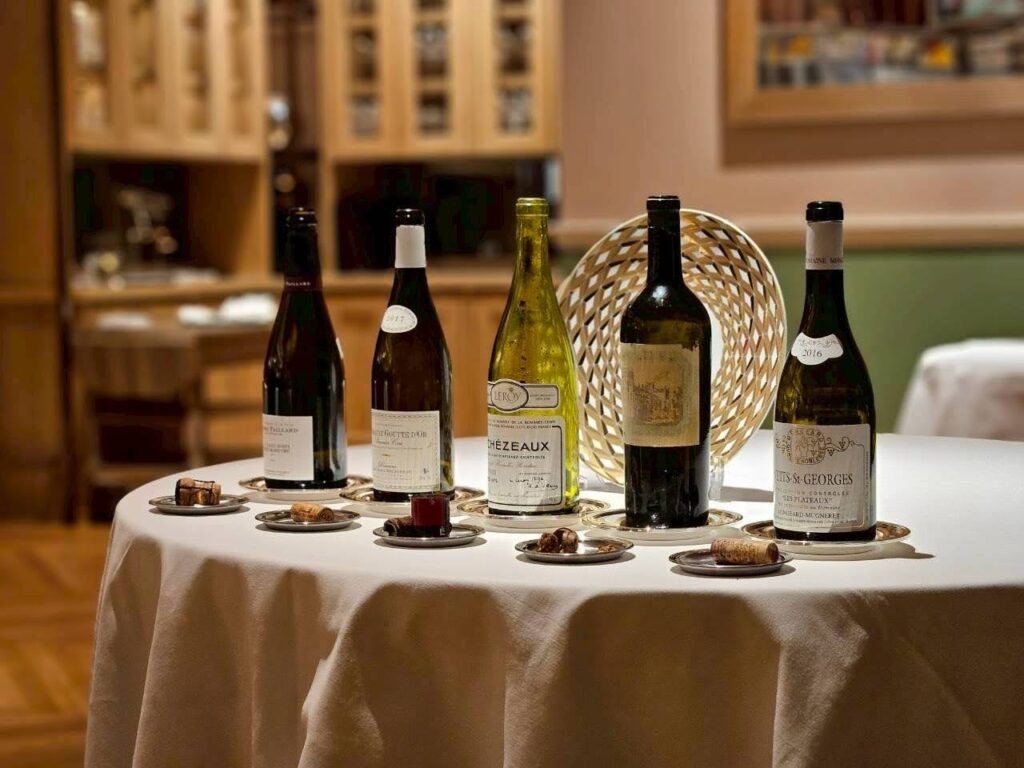
Approximately twice a year, at restaurant Le Jardin, we host wine events where, in addition to the wines from our cellar, we source selected bottles tailored to the theme of each event. These events have since become one of our most popular offerings, often reaching full capacity quickly with returning guests. In November 2025, we held a dedicated evening featuring Échézeaux from Domaine de la Romanée-Conti, where guests had the rare opportunity to experience the exceptional 1979 vintage. This year, on Saturday June 13, we will be hosting an exclusive evening bringing together all five of Bordeaux’s most iconic wineries, whose prestige has endured across the ages. For the latest information, please visit our website or follow us on social media.
With this edition of “Le Jardin News”, we have turned our attention to the world of wine. Deeply rooted in tradition, it forms an essential part of what we cherish as an auberge devoted to French cuisine.
We look forward to sharing more of its richness in our future articles.
For “Le Jardin News” Vol. 1, please click here.


