

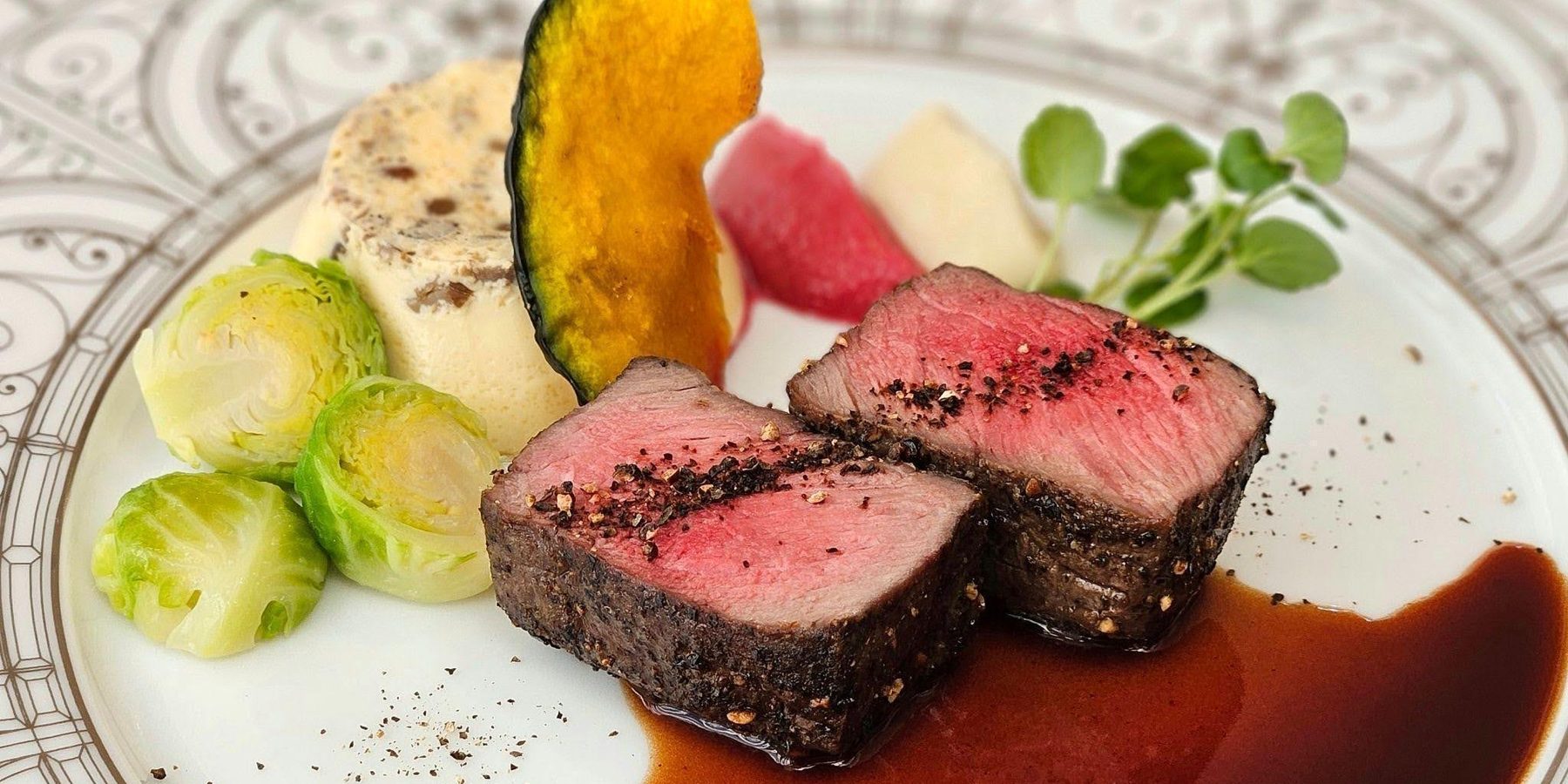
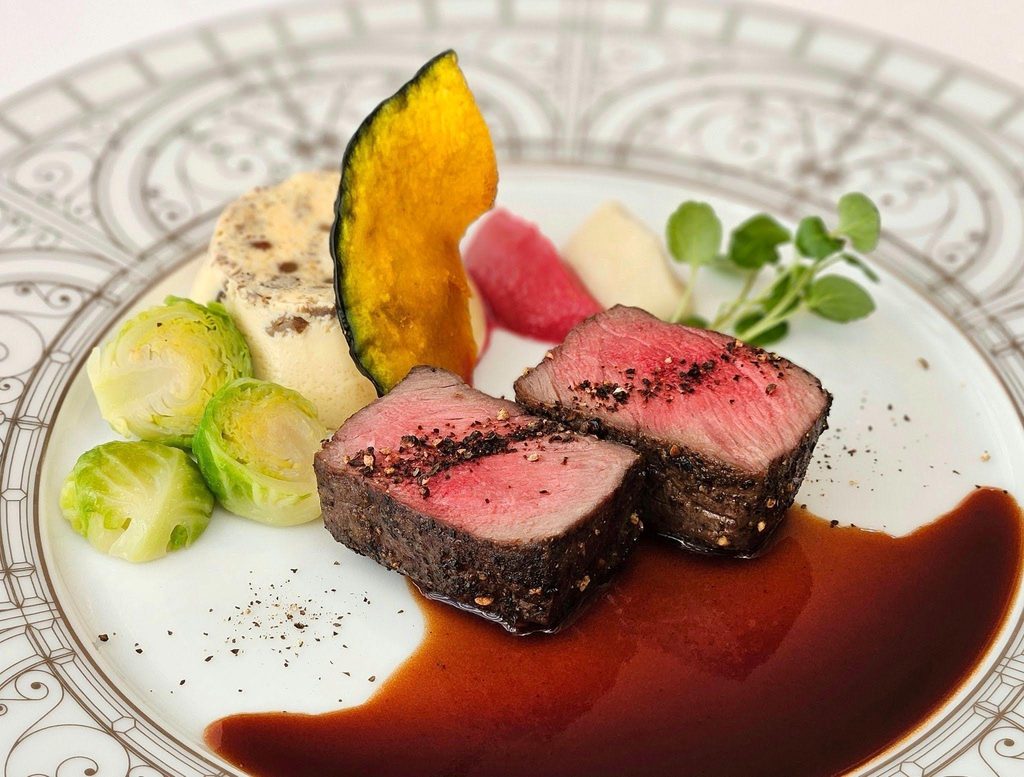
In the third edition of the Le Jardin News, we explore the art of pairing gibier, or game meat, with wine, offering a deeper appreciation of this exquisite seasonal cuisine, traditionally savored during the autumn and winter months.
At HOTEL de L’ALPAGE, we regularly host exclusive wine events offering each time a special opportunity to discover exquisite wines carefully selected by our sommelier and thoughtfully paired with authentic French cuisine.
On Saturday, October 17, we will host our fourth wine event, “An Evening of Burgundy Wines.”
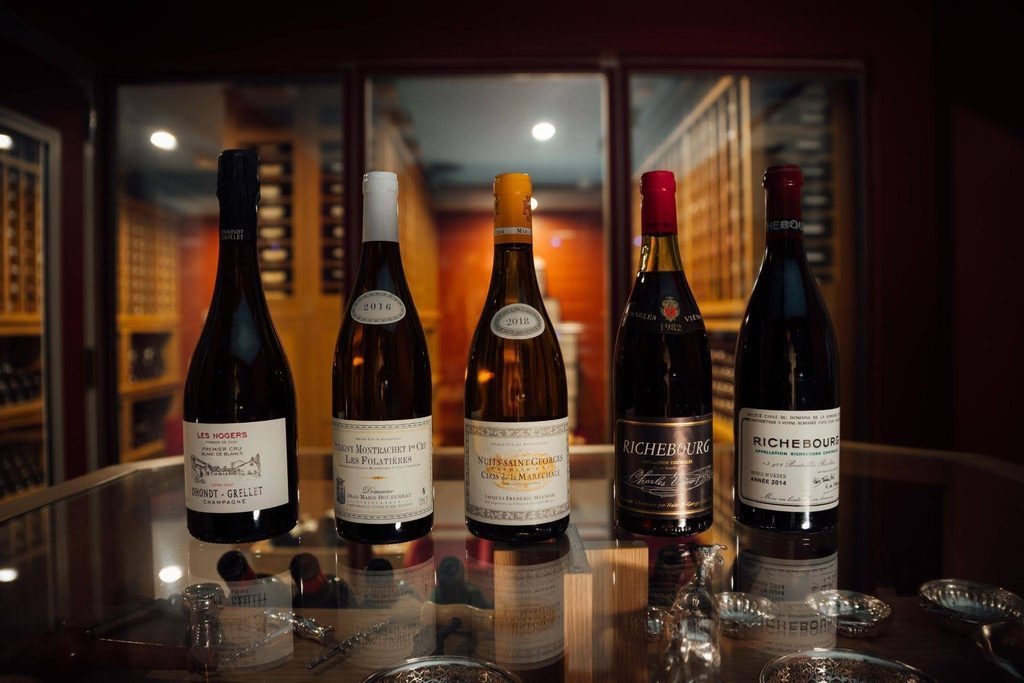
This exceptional evening will feature a 2014 vintage produced by Domaine de la Romanée-Conti, as well as a 1982 Charles Vienot Richebourg, a rare wine now scarcely encountered on the market. Enjoy the extraordinary opportunity to compare and savor two remarkable vintages from the same Richebourg terroir, each revealing the character of a different era.
For the main course of the dinner, guests will be treated to an exclusive dish created especially for the occasion: Roasted Ezo Venison Saddle with Grand Veneur Sauce and presented with an elegant tableside découpage service.
Savor the truly unique character of two Richebourg wines born from the same vineyard, thoughtfully paired with a full-course menu specially arranged by our chef.
Gibier is characterized by its rich flavors and distinctive aromas, and is one of France’s traditional culinary specialties enjoyed from autumn through winter.
In French, the word “gibier” originally refers to game captured through hunting like wild birds and animals, or the meat obtained from them. The term stands in contrast to livestock and poultry, which are raised and domesticated by humans.
Hunting is one of humanity’s most fundamental activities, dating back to long before the beginnings of agriculture. At the same time, beyond the work of professional hunters, hunting was also regarded as a noble sport among the aristocracy as far back as ancient Rome. Pursuing game on horseback or on foot through forests and mountains was considered a form of training for warriors, requiring both skill and strategy in anticipating the movements of animals. Depending on the animal and circumstances, hunting could also be a dangerous pursuit in which the hunter risked losing their own life. This element of danger is reflected in the English word “game,” which is also used to refer to gibier.
Before the French Revolution, hunting rights were among the privileges held by nobles. Hunting by peasants and ordinary hunters was therefore strictly restricted, in part to ensure that sufficient game would remain available for the grand hunting gatherings hosted by the aristocracy.
The exquisite flavors of gibier, combined with the prestige and nobility associated with aristocratic hunting, have established it as a prized ingredient in French cuisine. Another reason for its enduring appeal is the remarkable variety of game available. Compared with domesticated animals and birds, wild game offers a greater diversity of species, each possessing its own distinctive character and flavor.
In France, hunting has long been a deeply rooted tradition with a broad following. Gibier was likewise widely enjoyed, although it was the aristocracy and royalty who brought its preparation to the highest level of refinement.
Gibier was not simply roasted or stewed. Over time, sophisticated culinary techniques were developed to bring out its distinctive character, including the preparation of sauces using fonds, rich stocks made from bones, as well as cooking methods such as braising. Needless to say, such elaborate preparations required spacious kitchens and a considerable number of skilled cooks.
These refined culinary traditions were cultivated primarily in royal courts and aristocratic households. By the 18th century, however, they had gradually begun to spread to the homes of wealthy members of the bourgeoisie, as well as to restaurants and catering establishments known as traiteurs.
It was the French Revolution that dramatically accelerated this movement and ultimately helped shape the flourishing restaurant culture we know today. As many aristocrats fled abroad in fear of the Revolution, the numerous servants employed in their households suddenly found themselves without work. Among them were their private chefs, many of whom went on to open restaurants of their own. This transformation was also greatly facilitated by the abolition of the guild system, which before the Revolution had restricted private chefs from establishing businesses.
As the culinary traditions that had flourished at royal and aristocratic tables became available to a much wider public through restaurants, France’s dining culture began to develop on an entirely new scale. Thanks to these chefs, the sophisticated culinary techniques cultivated in royal courts and aristocratic households gradually found their way into restaurants in Paris and other major cities.
Following the French Revolution, the hunting system also underwent significant changes, and the number of people involved gradually expanded. During the 19th century, chefs such as Carême and Escoffier further developed and systematized French culinary techniques and cuisine. Gibier, too, evolved into a more refined form of cuisine, with cooking methods, aging techniques, and sauces carefully selected according to the species and characteristics of each game animal.
Once closely associated with the hunting culture of royalty and the aristocracy, gibier cuisine has evolved over time and today, it continues to be celebrated as an integral part of French culinary tradition, offering a taste of both its rich heritage and the changing seasons.
From venison and wild boar to hare and pheasant, French cuisine brings together wines, fruits, mushrooms, and aromatic vegetables to complement the distinctive flavors and textures of each type of game reflecting the culinary techniques refined and passed down through generations of French gastronomic tradition.
In Japan, too, gibier has long been enjoyed as a valuable source of nutrition, with wild boar traditionally used in Botan-nabe, a hot pot dish, and venison in Momiji-nabe. In recent years, as damage caused by increasing populations of wild animals has become a serious issue across Japan, gibier cuisine has also been attracting growing attention. Venison, in particular, is valued for its mild flavor and delicate character, as well as being low in calories, high in protein, and rich in iron.
Gibier is also known for containing heme iron, a form of iron that is readily absorbed by the body.
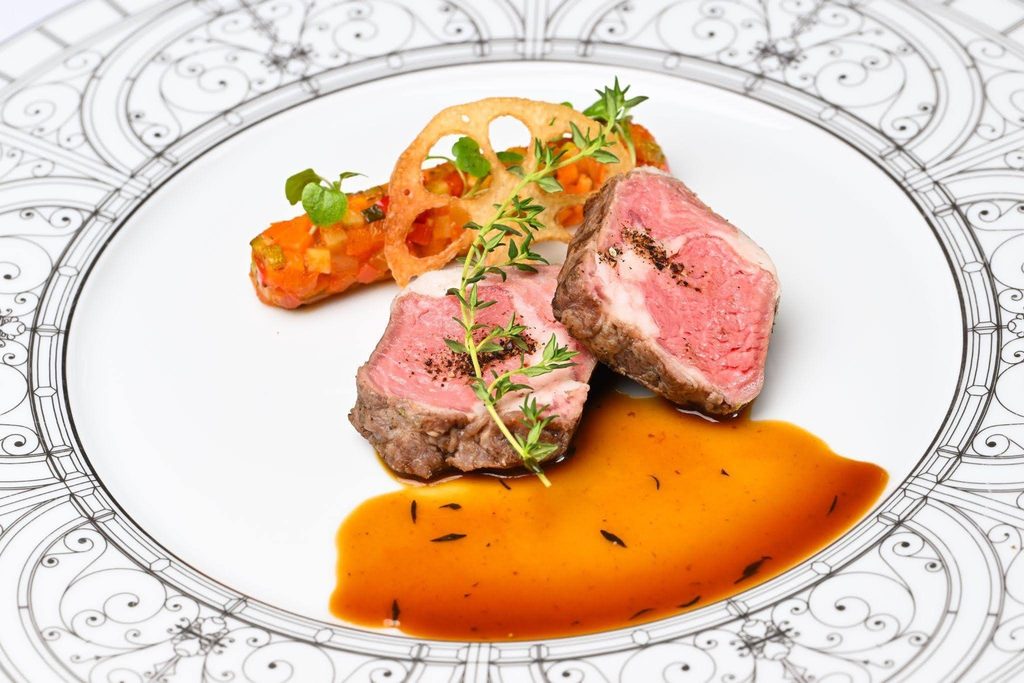
At HOTEL de L’ALPAGE, venison is also featured in our Autumn and Winter dinner menu, available from October through January. For selected dinner courses, guests may choose ”Roasted Ezo Venison Loin served with Cocoa-Infused Poivrade Sauce” as their main course.
Ezo venison loin is characterized by its delicate, lean texture and exceptionally mild flavor, offering a refined and succulent taste with a subtle depth of character. The premium Ezo deer loin is seasoned with salt and pepper and seared until beautifully browned on the surface, then carefully roasted to seal in its natural juices while achieving a beautiful rosy center. It is paired with Poivrade sauce, one of the classic sauces traditionally served with game. The name poivrade derives from the French word poivre, meaning pepper, and refers to a traditional sauce characterized by the aromatic taste of black pepper and a subtle acidity, often served with game such as venison and wild boar.
For our version, a rich fond is carefully prepared from Ezo deer bones and trimmings, then combined with veal stock, red wine, port, and black pepper to create a Poivrade sauce that enhances the natural flavor of the venison. A small amount of dark chocolate is then added, bringing depth through the characteristic bitterness and aroma of cacao. A light dusting of cocoa powder further accentuates its rich fragrance.
The sauce brings together the spicy character and acidity of black pepper with the gentle bitterness of cacao, beautifully complementing the delicate “umami” and distinctive wild flavor of the Ezo deer. The concentrated savoriness of the venison, balanced by the sauce’s acidity and spice, creates layers of flavor and allows a different expression to emerge with every bite.
To fully appreciate the harmony between gibier and wine, discover a selection of wines that pair particularly well with our Roasted Ezo Venison Loin with Cocoa-Infused Poivrade Sauce.
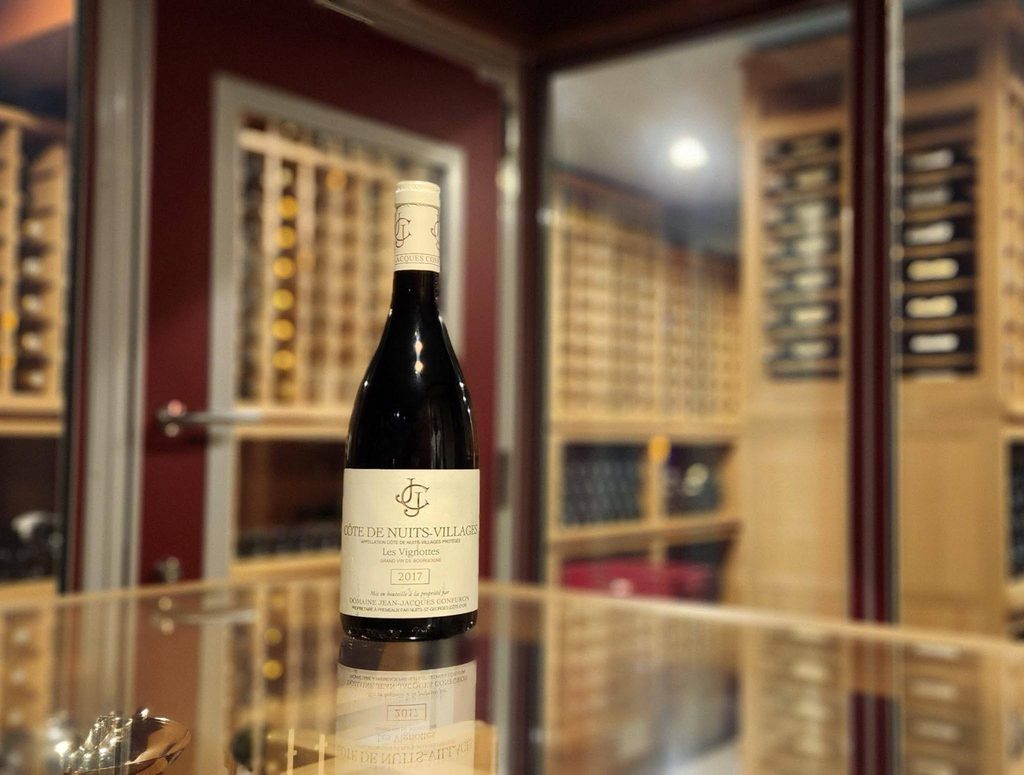
Among the wines that have long been considered ideal for gibier are the wines of Côte de Nuits in Burgundy. The balance of fruit, acidity, tannins, and complex aromas developed through aging, beautifully embraces the distinctive flavors of wild game while enhancing the character of the dish.
Unlike conventional meats from domesticated animals, gibier possesses a pronounced wild character, distinctive aromas, and concentrated flavor. The elegant aromas reminiscent of red fruits and the fine-grained tannins of Pinot Noir, Burgundy’s signature grape variety, complement these distinctive qualities without overpowering them, allowing the unique character of the game to shine through. Burgundy wines are also exceptionally well suited to lean meats such as guinea fowl, pigeon, and duck.
Rather than overpowering the intensity of gibier, Burgundy wines complement its delicate nuances, allowing its distinctive flavors to unfold. This harmonious interplay makes them a truly natural and refined pairing for game cuisine.
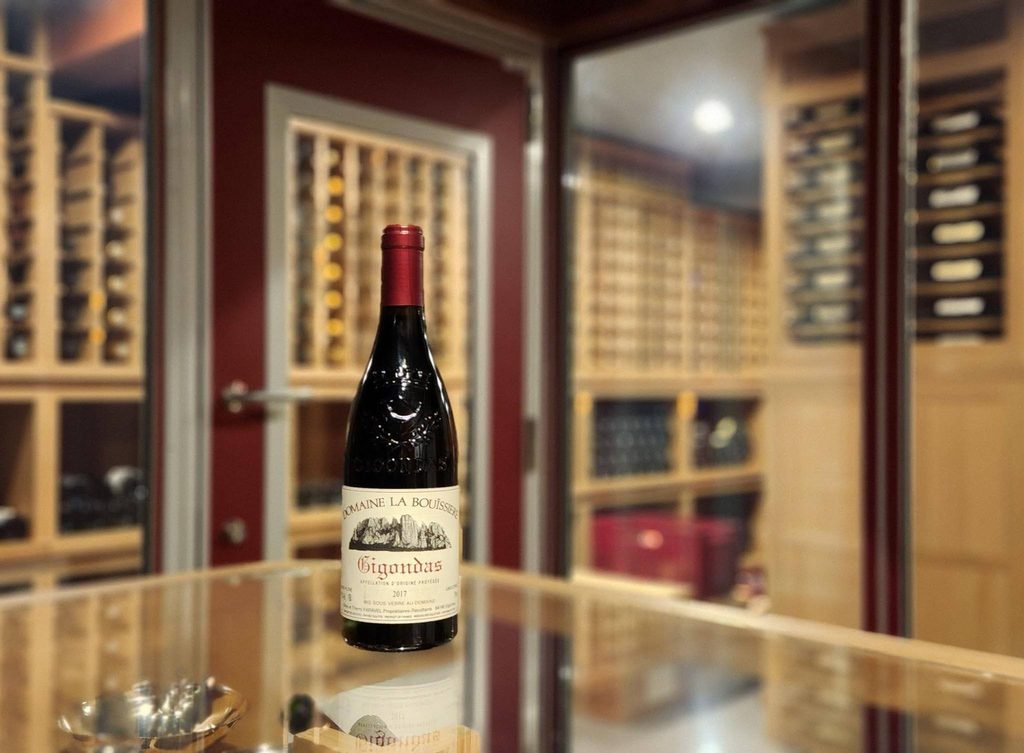
Other French wines that pair particularly well with gibier, alongside wine from Burgundy, are the wines of the Côtes du Rhône, produced in the Rhône Valley of southern France. In addition to rich aromas of dark fruits, these wines are often characterized by notes of pepper and spice, with many possessing generous fruitiness and a well-defined structure. These qualities harmonize beautifully with the robust savoriness and wild character of gibier while adding further depth to the dish through layers of dark-fruit and spicy aromas.
Our wine cellar is home to more than 2,000 bottles, all imported directly from France, allowing our guests to experience the authentic flavors and aromas of French wines.
Even the same gibier dish can reveal a different character depending on the wine with which it is paired and our sommelier will be pleased to recommend a wine to suit all individual preferences.
Savor the distinctive gibier cuisine of our restaurant Le Jardin, paired with our selection of wines imported directly from France, and enjoy a truly special dining experience.
For Le Jardin News Vol.1, click here.
For Le Jardin News Vol.2, click here.