



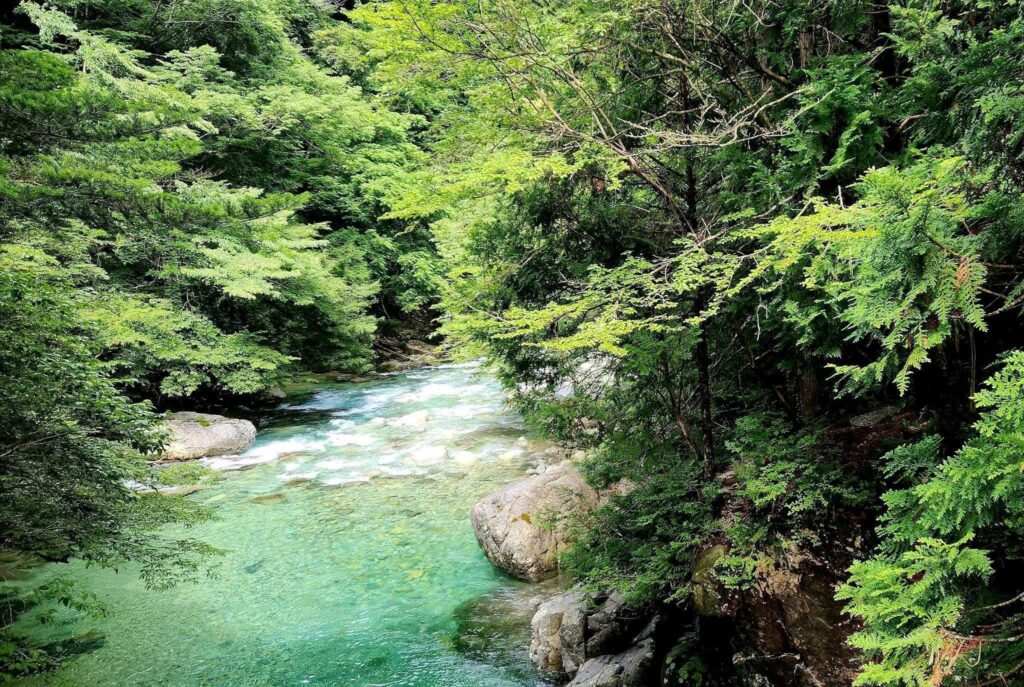
One of Nagano Prefecture’s greatest attractions is its remarkable diversity, offering completely different experiences depending on the region and the season.
In summer, visitors can enjoy refreshing mountain trekking and water activities on the many lakes scattered throughout the prefecture. Autumn brings spectacular foliage and seasonal gourmet food such as gibier cuisine or chestnut sweets, while winter offers world-class ski resorts, a wide variety of winter sports, and relaxing hot springs. In spring, scenic drives through fresh greenery and cherry blossom viewing provide yet another unique way to experience the region. Whatever the purpose of your journey, Nagano offers countless experiences to suit every traveler’s interests.
This rich variety is made possible by the prefecture’s vast landscape, which creates diverse topography and climates across the region.
Nagano Prefecture is divided into four areas: Hokushin (Northern Nagano), Toshin (Eastern Nagano), Chushin (Central Nagano), and Nanshin (Southern Nagano).
The Hokushin region is strongly influenced by the Sea of Japan climate and receives abundant snowfall during the winter months. As a result, it is home to many renowned ski resorts and is one of Japan’s premier destinations for winter sports. Famous and appealing areas such as Shiga Kogen and Nozawa Onsen Village allow visitors to enjoy skiing and snowboarding before unwinding in the hot spring.
The Eastern Shinshu region, where the famous summer resort town of Karuizawa is located, is known for its high rate of sunny days and relatively cool highland climate, even during summer. The area is also home to Ueda City, which is closely associated with the samurai warrior Sanada Yukimura, and Tomi City, which is renowned for its many wineries.
The Central Shinshu region has a typical inland and basin climate, characterized by low precipitation and significant differences in temperature between day and night. The region is also blessed with high elevations and spectacular mountain scenery, making it popular for nature tourism. It is also known for the wasabi cultivated using the area’s pristine waters. Matsumoto City, home to the National Treasure Matsumoto Castle, and Azumino City, where the famous Daio Wasabi Farm is located, are both part of this region.
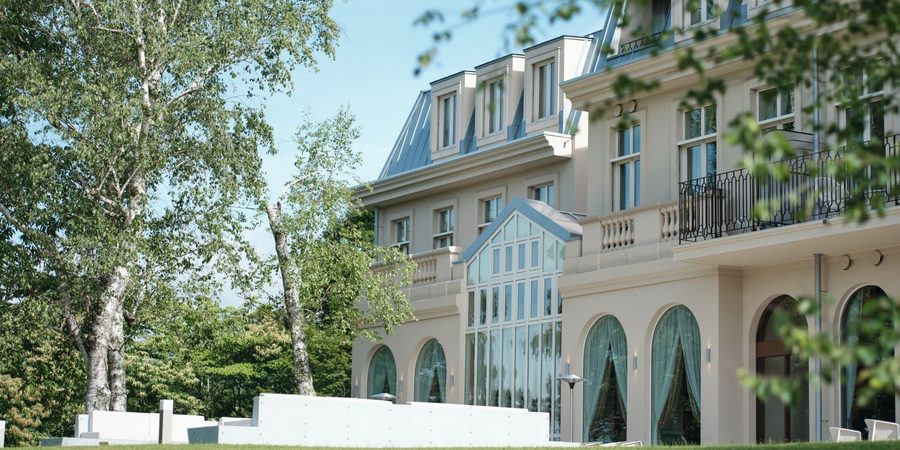
Chino City, where our hotel is located, is classified as part of the Southern Shinshu region. With long hours of sunshine and a relatively mild climate, the area is well suited to fruit cultivation. Suwa City, located approximately 30 minutes by car from our hotel, is known for its cultivation of quince, while Iida City and Shimoina District are renowned for Ichida persimmons, a local specialty.
However, Nagano Prefecture’s four regional divisions were not established based on climate. Rather, they developed from historical spheres of interaction and administrative boundaries. At the same time, each region is separated by mountain ranges, basins, and other geographical features, giving rise to distinct climates, cultures, and local industries.
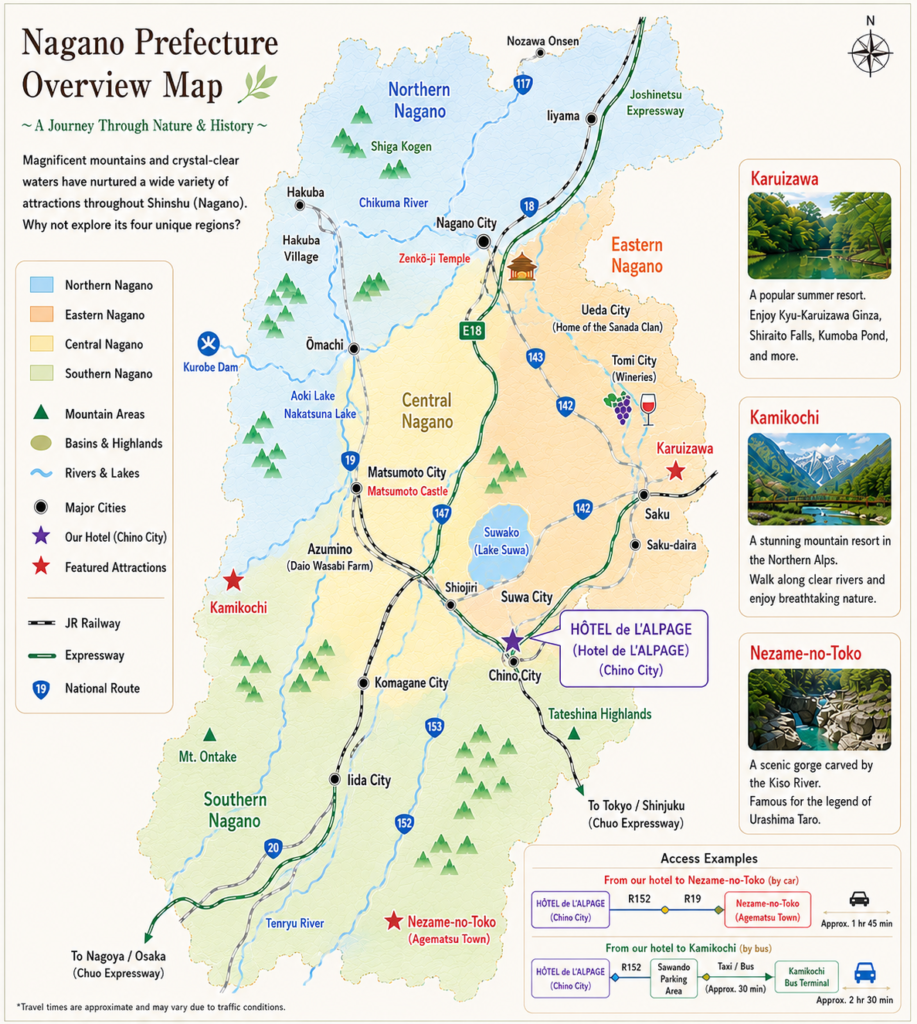
Opportunities to learn about Nagano Prefecture’s unique regional divisions, local specialties and sightseeing destinations shaped by each area’s climate and geography, are relatively rare.
With that in mind, this article introduces some of the renowned summer resorts that are one of Nagano’s defining features. We will introduce not only scenic landscapes and outdoor activities, but also the history, geography, and cultural background that make each destination even more fascinating to explore.
Tateshina, where our hotel is located, has long been renowned as one of Nagano’s most beloved summer retreats. Learn more about Tateshina in our past article, “Tateshina Highlands during the Summer”.
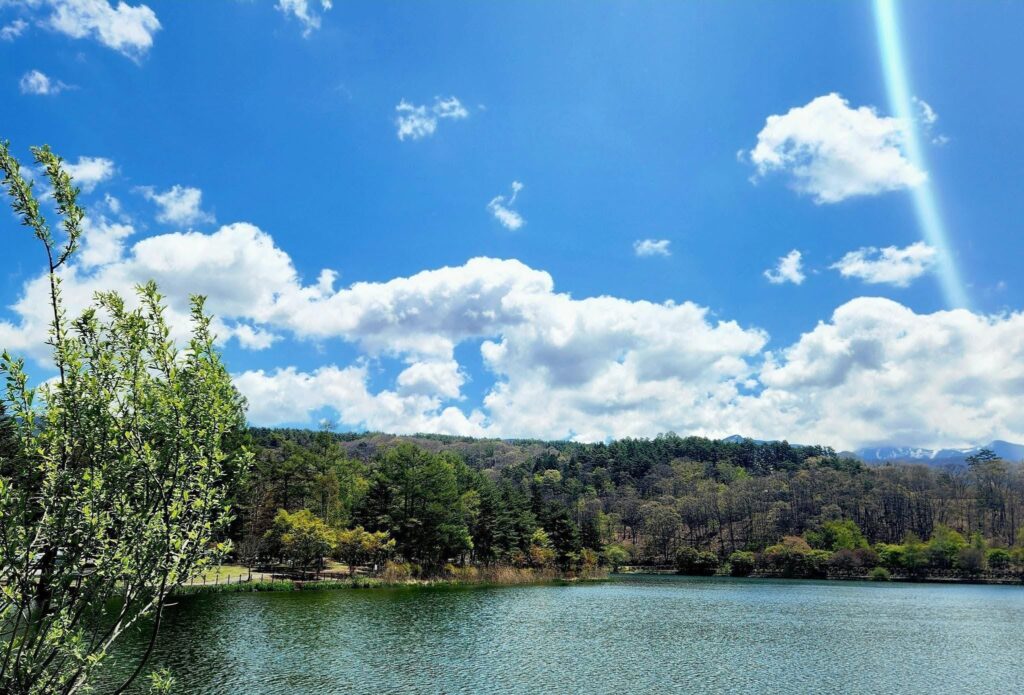
Karuizawa has flourished as one of Japan’s premier resort destinations, renowned both as a summer retreat and an exclusive villa community.
Although summers have become warmer in recent years, average temperatures in July and August remain pleasant at about 21–23°C, making it an ideal escape from the summer heat.
Originally, Karuizawa prospered as Karuizawa-juku, a post town along the historic Nakasendo route that connected Edo (present-day Tokyo) and Kyoto. One of its former inns, Kameya, a waki honjin that served as a secondary official lodging for high-ranking travelers, was transformed during the Meiji era into the elegant Mampei Hotel, a Western-style landmark that continues to welcome guests.
Karuizawa’s transformation into a summer resort began with the arrival of British missionary Alexander Croft Shaw. Captivated by the area’s cool climate, Shaw built a summer villa here, inspiring other fellow foreign missionaries and prominent cultural figures to follow. Over time, Karuizawa developed into an international resort destination. This history laid the foundation for the churches, villa culture, and refined streetscape that continue to define Karuizawa today.
Old Karuizawa Ginza Street, the main street of Old Karuizawa, attracts countless visitors each year. Blending elegant streetscapes with the area’s natural beauty, it is one of Karuizawa’s most beloved places to enjoy a leisurely stroll. Historic bakeries, charming cafés, and specialty shops line the street, allowing visitors to browse local boutiques and sample regional treats as they explore.
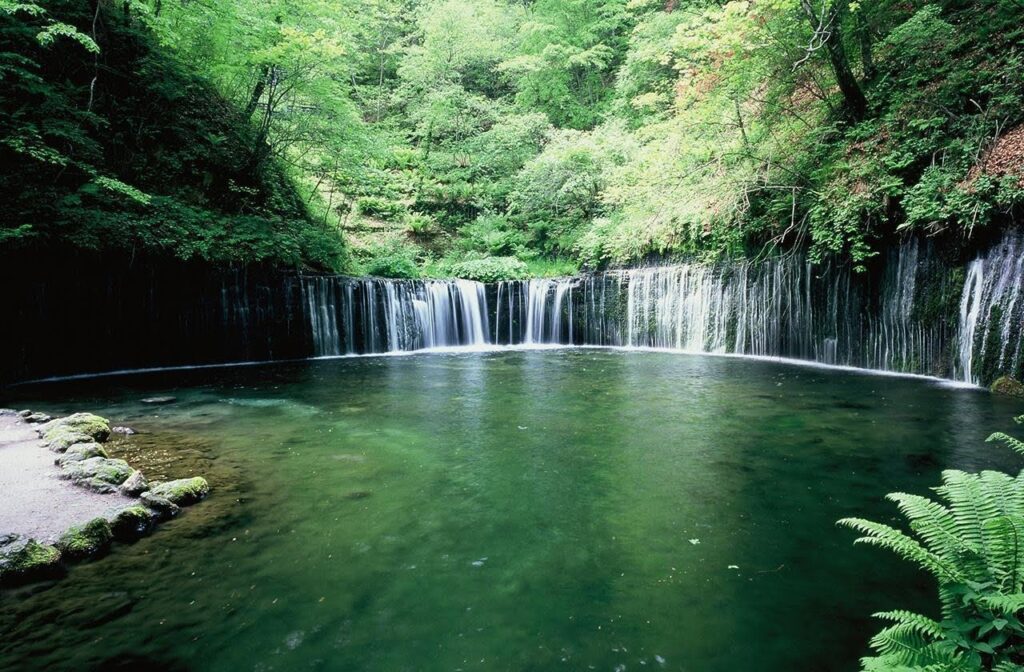
The surrounding area also offers an abundance of natural attractions, with Shiraito Falls being one of the most popular spots to visit alongside a trip to Karuizawa. Stretching approximately 70 meters across and standing about 3 meters high, the waterfall is formed by underground spring water gently cascading down the rock face, creating an enchanting scene. The refreshing air, the lush greenery, and the soothing sound of flowing water provide a welcome escape from the summer heat. Well-maintained walking paths make it an easy and enjoyable destination for families, couples, and anyone wishing to experience Karuizawa’s natural beauty.
For those seeking a peaceful and relaxing experience, Kumoba Pond is highly recommended. Particularly in summer, the vibrant greenery of the surrounding trees is beautifully reflected on the water’s surface, creating a tranquil landscape where visitors can enjoy a leisurely stroll while breathing in Karuizawa’s refreshing mountain air. Although it is best known as one of Karuizawa’s most celebrated autumn foliage spots, Kumoba Pond is equally serene and inviting in the season of fresh greenery, making it the perfect place to experience the unique charm of Karuizawa.
Karuizawa’s refreshing landscapes and tranquil atmosphere offer the perfect setting for a relaxing summer getaway.
Our next destination is Kamikochi, one of Japan’s most celebrated alpine landscapes.
From Tateshina, it takes approximately two hours by car to Sawando Parking Area, followed by a 30-minute taxi or bus ride to the Kamikochi Bus Terminal.
Kamikochi is far more than a place of outstanding natural beauty. It has four distinct identities: a sacred place of worship, a land of exploration, a mountain resort, and a symbol of nature conservation. As part of Chubu Sangaku National Park, it has also been designated as both a Special Place of Scenic Beauty and a Special Natural Monument under Japan’s national cultural heritage system.
While Karuizawa is known for its refined resort atmosphere, Kamikochi offers a distinctly different experience. Discovering the stories behind its origins, exploration, and conservation efforts makes every visit even more memorable.
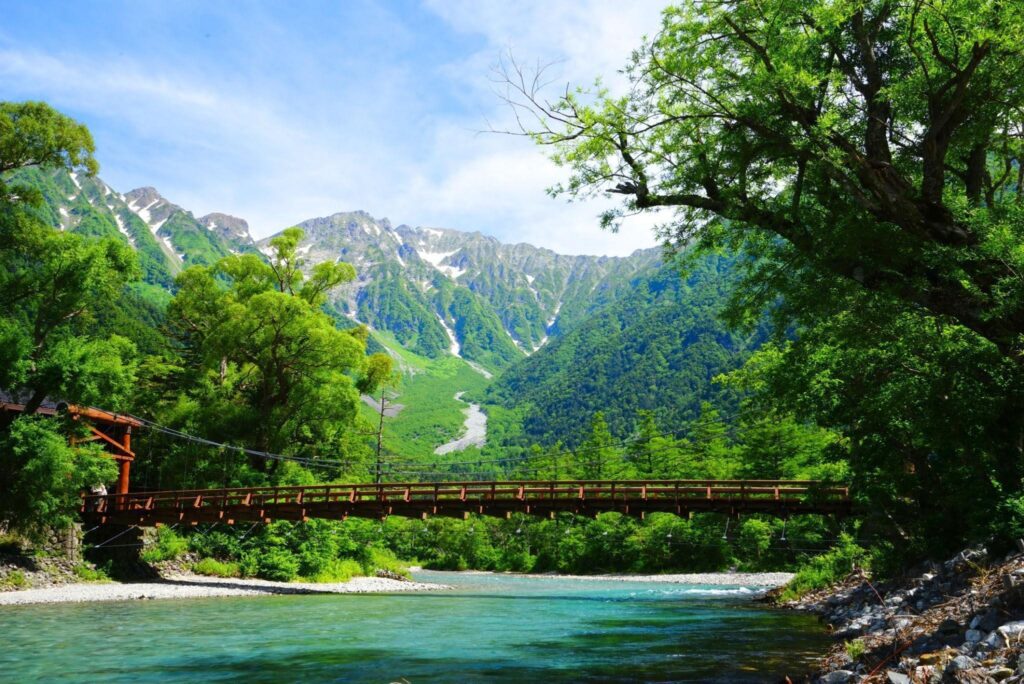
Situated at an elevation of approximately 1,500 meters, Kamikochi is a beautiful alpine basin surrounded by 3,000-meter peaks such as the Hotaka Mountain Range and Mount Yake, and the crystal-clear Azusa River flowing through its valley. Even in summer, temperatures can drop to around 15°C in the early morning and evening, while daytime remains pleasantly cool, making Kamikochi a cherished natural summer retreat.
One of Kamikochi’s lesser-known characteristics is that private vehicles are not permitted beyond designated access points. To protect the natural environment, visitors are required to leave their cars at parking areas outside the valley and continue by shuttle bus or taxi. This long-standing conservation effort has preserved Kamikochi’s unspoiled landscapes, clean air, and peaceful atmosphere. The commitment to prioritizing nature over convenience is one of the destination’s most distinctive qualities.
And, of course, no visit to Kamikochi would be complete without exploring its viewpoints and walking trails.
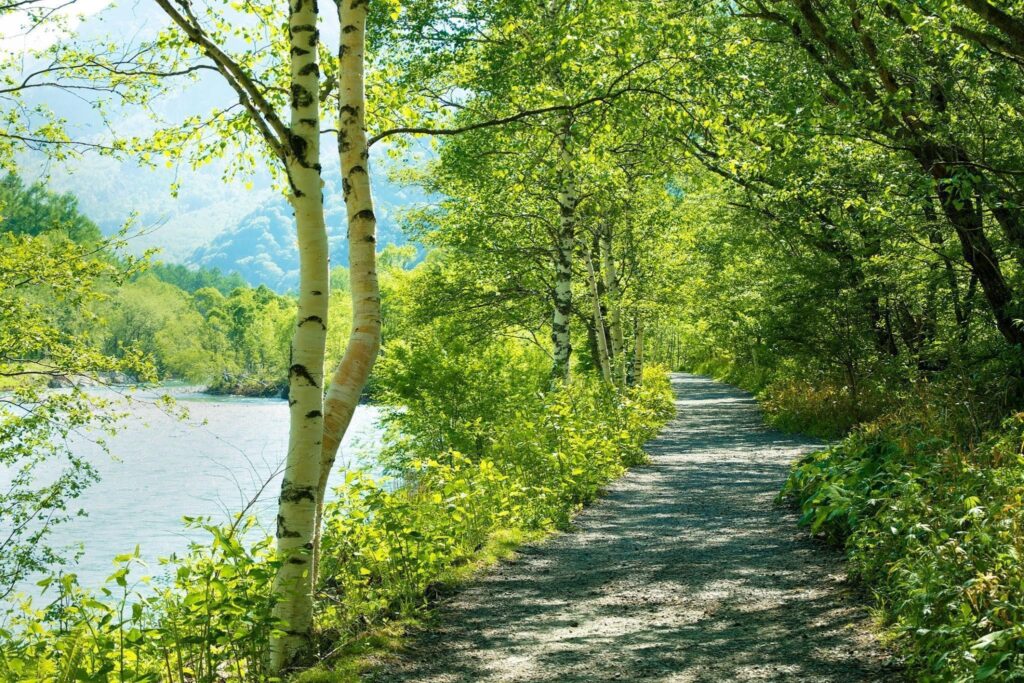
A stroll along the Azusa River is one of Kamikochi’s recommended experiences. Beginning at the iconic Kappa Bridge, well-maintained walking trails lead visitors through breathtaking scenery, where the crystal-clear river, the majestic peaks of the Northern Alps, and the songs of wild birds can all be enjoyed with the senses. With gentle and level paths that require no specialized hiking equipment, the area is ideal even for first-time visitors.
Kamikochi’s pristine natural environment provides a habitat for a wide variety of alpine plants and wild birds. With a bit of luck, visitors may also spot Japanese macaques in their natural surroundings. Bringing a pair of binoculars allows for a closer look at the area’s abundant wildlife, while photography enthusiasts will find endless opportunities to capture the landscapes.
For those wishing to experience the history of nature itself, Taisho Pond is a destination not to be missed. The pond was created when an eruption of the active volcano Mount Yake sent vast amounts of volcanic ash and debris cascading down the mountain side, damming the Azusa River.
Even today, the pond continues to evolve. Sand and sediment carried by the Azusa River gradually accumulate, making the water shallower and causing the lake to shrink little by little each year. Witnessing a landscape that was created by nature and continues to be reshaped by it is both fascinating and humbling, offering a powerful reminder of nature’s immense force.
In this way, Kamikochi has, for more than a century, stood as a symbol of Japan’s mountain tourism, welcoming visitors while preserving its extraordinary natural environment. Discovering the story behind Kamikochi transforms a beautiful visit into a truly memorable experience.
Nezame-no-Toko, is one more destination worth discovering as a remarkable natural attraction shaped by the forces of nature. This nationally designated Place of Scenic Beauty is a dramatic gorge along the Kiso River in Agematsu Town, Nagano Prefecture. It can be reached in approximately 1 hour and 45 minutes by car from our hotel.
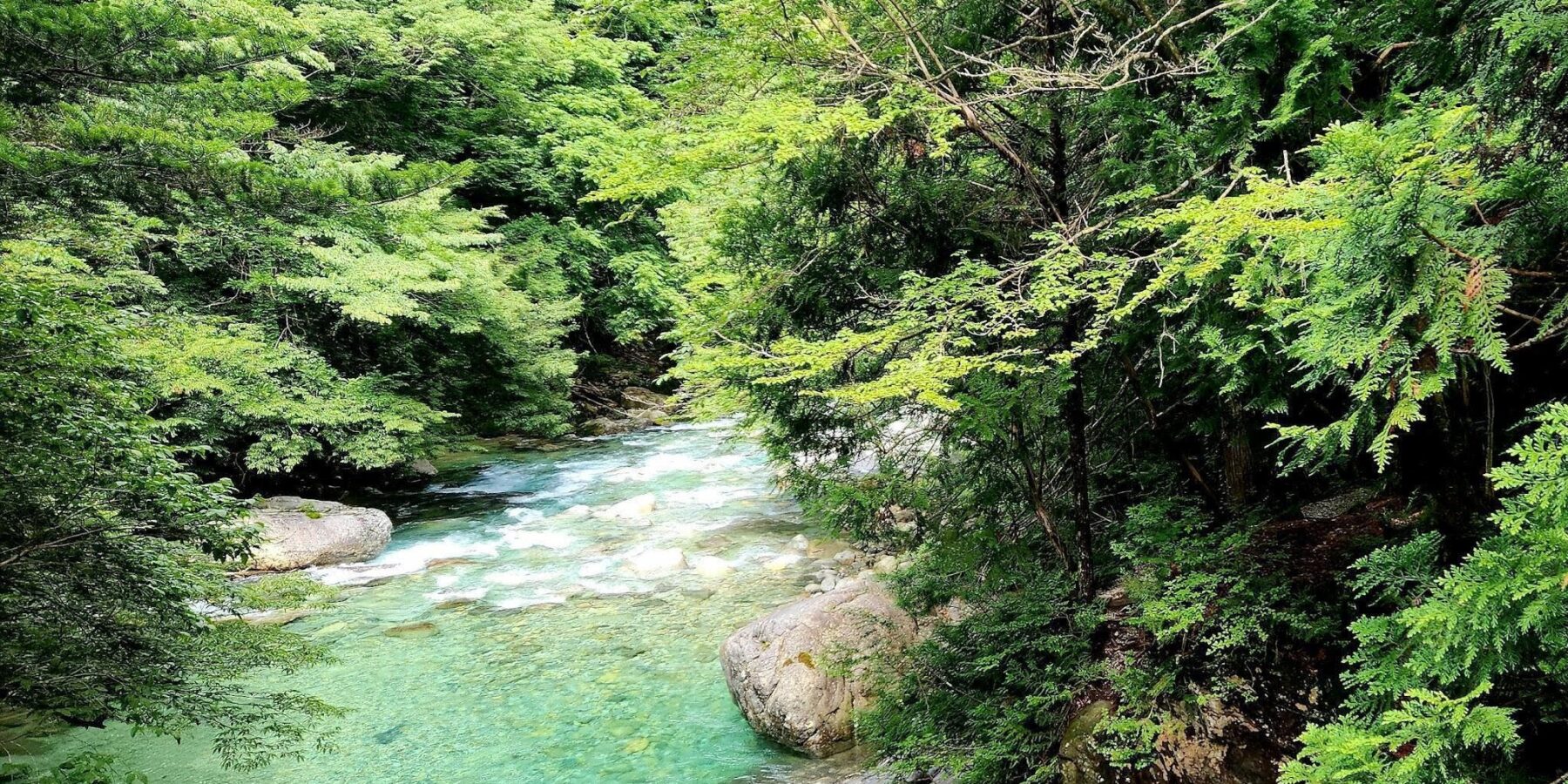
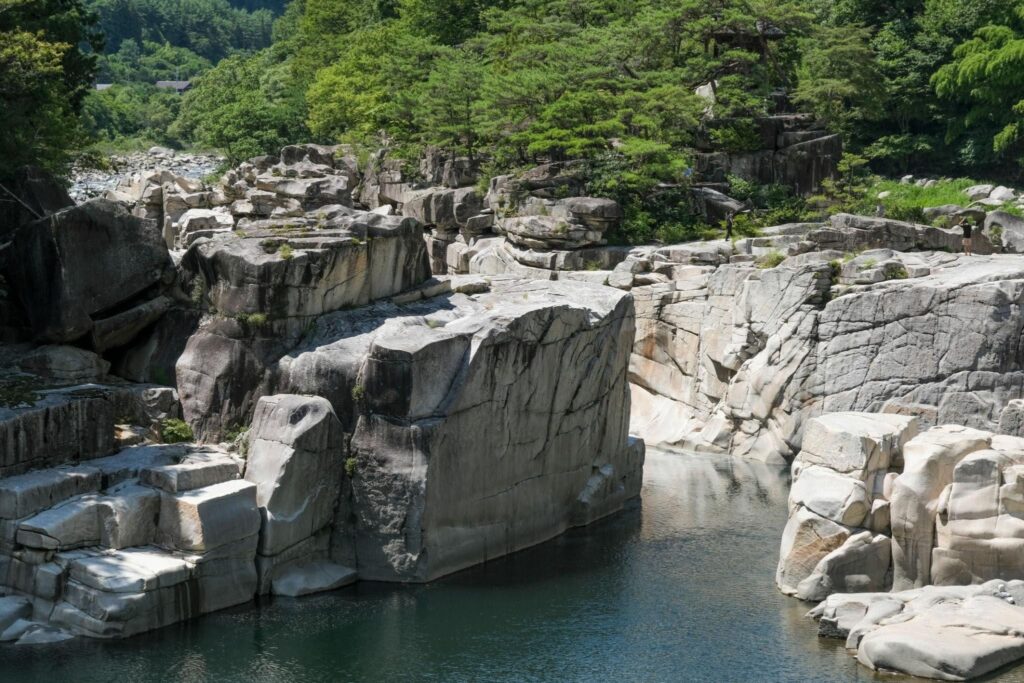
The striking contrast between the massive white granite rock formations and the emerald-green waters of the Kiso River has long made Nezame-no-Toko one of Kiso Valley’s most celebrated scenic landscapes. Stretching for approximately 1.5 kilometers, the gorge features unusual rock formations and numerous potholes, creating a landscape that can only be described as a natural sculpture.
Over countless millennia, the powerful flow of the Kiso River has gradually carved through the hard granite, shaping the scenery seen today. Unlike many famous gorges, Nezame-no-Toko is best appreciated as a work of natural art, sculpted patiently by the river over tens of thousands of years.
Nezame-no-Toko is also renowned for its connection to the beloved Japanese folktale of Urashima Taro. According to local legend, after returning from the Dragon Palace beneath the sea, Urashima Taro eventually arrived at this very spot during his travels. Here, he opened the mysterious box (tamatebako) he had been given and instantly transformed into an old man with white hair, feeling as though he had awakened from a long dream.
It is from this legend that the gorge is believed to have gained its name, which literally means ‘the Bed of Awakening.’
At the heart of the gorge stands a small hall dedicated to Urashima Taro, commemorating this tale.
The cool breeze flowing through the Kiso River gorge makes Nezame-no-Toko feel noticeably cooler, making it an especially rewarding destination during the summer months. The striking contrast of white granite, emerald-green water, and deep green forests creates an unforgettable landscape and summer retreat unique to the Kiso Valley.
The closer Rinsen-ji Temple offers one of the finest panoramic views of Nezame-no-Toko. From the temple’s main hall, visitors can see the entire gorge before descending to the rock formations below. It is said that travelers during the Edo period also paused here to admire the same breathtaking view.
If Kamikochi is defined by spectacular mountains and rivers, then Nezame-no-Toko is a place where water has spent tens of thousands of years sculpting solid rock into a masterpiece of nature. Enriched by the legend of Urashima Taro and the history of the Nakasendo route, it is a destination where nature, history, and culture come together in a breathtaking landscape.
For a summer visit, Nezame-no-Toko is an exceptional retreat that captures the essence of Shinshu.
Immerse yourself in a landscape shaped over countless ages and experience the timeless beauty of one of the region’s most remarkable natural treasures.
In this article, we have introduced some of Shinshu’s finest summer destinations, focusing on refreshing highland retreats and locations to experience the beauty of nature during the summer season.
Many visitors who come to Tateshina in summer are looking to escape the intense heat and enjoy a slower pace, surrounded by magnificent natural landscapes.
After enjoying a stay in Tateshina, extend the journey with a scenic drive to destinations such as Karuizawa, Kamikochi, and Nezame-no-Toko. Each destination offers a distinctive landscape and atmosphere, creating a truly unforgettable travel experience.
The official Nagano Prefecture Tourism website features not only information about our hotel, but also a wealth of travel inspiration and sightseeing information from across the prefecture.
For more information on Nagano Prefecture, please click here.